Golden Buttery Fried Cabbage and Noodle Haluski Recipe
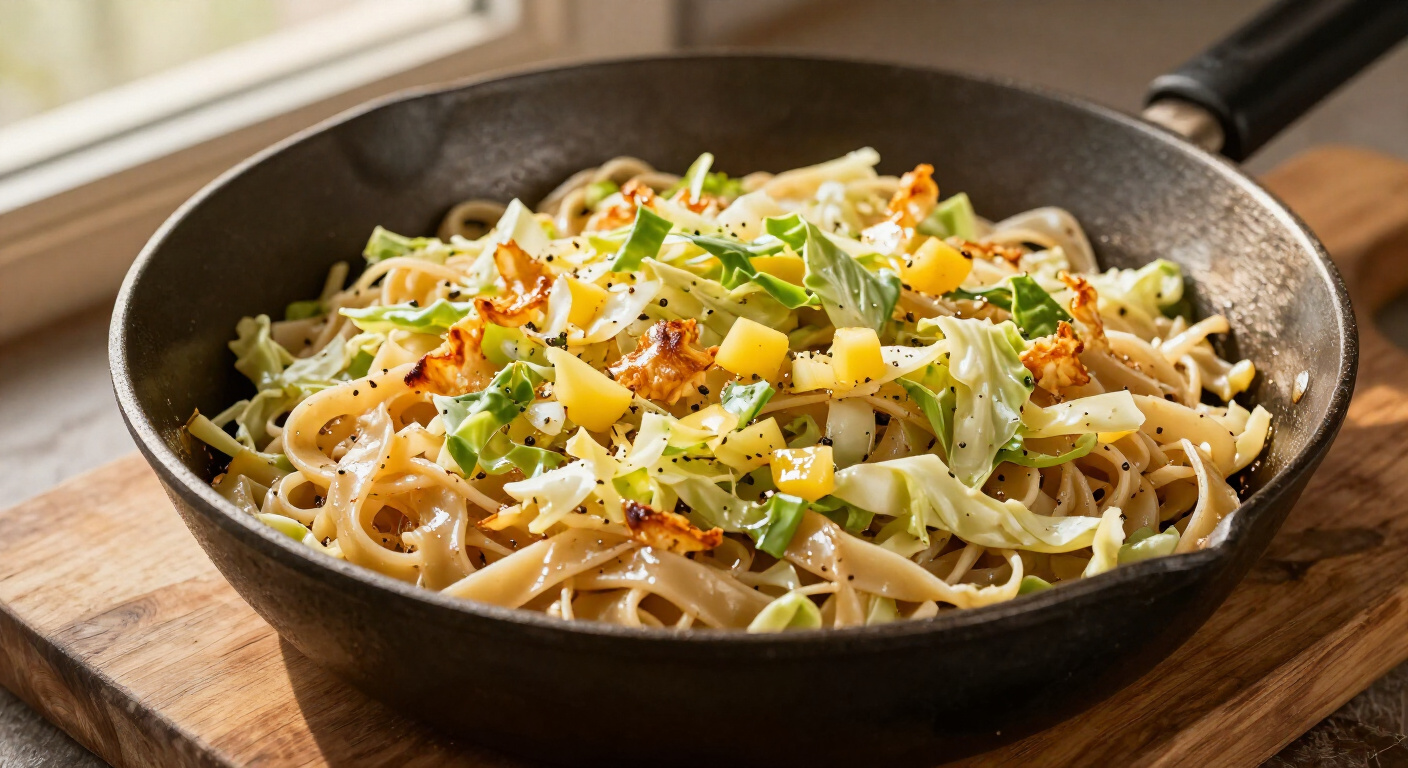
Haluski recipe ready in 55 minutes: golden, buttery cabbage and tender egg noodles in one skillet. Simple, savory comfort you'll want to make tonight.
This haluski recipe fills the kitchen with browned butter and sweet onion as cabbage turns silky and golden. In about 55 minutes, you get tender egg noodles and buttery cabbage in one skillet, with no fancy techniques needed. It's my go-to weeknight dinner when I want something comforting, and it stretches easily for a crowd.
Why This Recipe Works
• Salt the noodle water generously: Noodles soak up seasoning as they cook, so salting the water seasons them from the inside out. Draining them well keeps extra water from turning the skillet soggy.
• Thin shredding speeds up cabbage wilting: More cut edges mean more surface touches the hot fat at once. The cabbage softens quickly and turns tender without collapsing into mush.
• Medium heat builds golden-brown edges: A steady 350°F / 175°C lets the cabbage's natural sugars caramelize slowly. Stirring every few minutes keeps the edges from scorching while they turn deep gold.
• Tossing noodles in the pan coats them evenly: Every strand picks up the fat and seasoning left in the skillet. A short 3-4 minute toss heats them through without drying them out.
Ingredients You'll Need
Green Cabbage: This is the star of the skillet, shredded thin so it wilts quickly and turns silky. Thin shreds give more cut edges to catch the butter and browning. Savoy or napa cabbage works as a substitute, but both cook faster and will be softer.
Yellow Onion: Diced onion melts into the butter and gives the dish its sweet backbone. Cook it slowly so it turns soft and golden. A sweet onion like Vidalia works well if you want a milder, sweeter flavor.
Unsalted Butter: Butter is the main flavor here, and cubing it helps it melt evenly. Watch it foam and turn pale gold for a nutty taste. If you're out, use the same amount of salted butter and skip some of the added salt.
Vegetable Oil: A spoonful of oil keeps the butter from scorching while the onion and cabbage cook. It has a neutral taste, so it stays out of the way. Canola or another mild oil you already have will do just fine.
Wide Egg Noodles: Wide egg noodles are the classic choice because they soak up butter and catch little bits of cabbage. Boil them in well-salted water until tender with a slight bite. Egg fettuccine or the homemade dumplings below are the best swaps.
Kosher Salt: Salt wakes up every layer of this dish, from the noodle water to the cabbage. Its coarse flakes are easy to pinch and control. Fine table salt works too, but use about half as much so it doesn't taste harsh.
Freshly Ground Black Pepper: Freshly cracked pepper adds a warm, sharp bite that cuts through the rich butter. Pre-ground pepper is much duller and can taste dusty. Use white pepper if you want a softer heat with no dark specks.
All-Purpose Flour: Flour is the base of the homemade dumplings, giving them structure and a chewy bite. Use it in a level cup so the dough isn't too stiff. Bread flour makes a chewier dumpling, and cake flour gives a more tender one.
Large Egg: The egg binds the dumpling dough and adds richness and color. Let it come to room temperature so it blends in smoothly. Use the same amount of a flax egg or a store-bought egg substitute if needed.
Cold Water: Cold water keeps the dumpling dough tender and easy to shape. It hydrates the flour without making the dough sticky. Ice-cold milk works as a richer substitute if you want softer dumplings.


How to Make It (Step by Step)
Noodles boil while butter, onion, and cabbage cook down together in one big skillet, then everything gets tossed together. Even if you've never cooked cabbage this way, you'll have it golden and tender without any fuss.

- Boil the wide egg noodles in generously salted water at a rolling boil, 212°F / 100°C, until tender with a slight bite, 5-7 minutes. Drain well and set aside.

- Melt the cubed butter with the vegetable oil in a large skillet over medium heat, 350°F / 175°C, until the butter foams and turns pale gold, 1-2 minutes. Stir gently so it doesn't scorch.

- Add the diced onion and cook, stirring now and then, until soft and translucent with golden edges, 6-8 minutes at medium heat, 350°F / 175°C. Keep the heat steady so it sweetens.

- Stir in the thinly shredded cabbage and 1 teaspoon kosher salt. Cook until the cabbage wilts and turns tender with golden-brown edges, 12-15 minutes at medium heat, 350°F / 175°C. Stir every few minutes.

- Add the drained egg noodles and ½ teaspoon freshly ground black pepper. Toss until the noodles are coated and heated through, 3-4 minutes at medium heat, 350°F / 175°C.

- Taste and add more kosher salt as needed. Toss for 1 minute at medium heat, 350°F / 175°C, until evenly seasoned and steaming. Serve hot straight from the pan.

Recipe Notes
• Storage: Keeps in an airtight container in the fridge for 3 to 4 days. Freezing works, but the noodles turn soft. Reheat in a skillet with a splash of water over medium heat.
• Key substitution: Salted butter works well if you're out of unsalted. Hold back on the kosher salt and taste at the very end.
• Make-ahead tip: Shred the cabbage and dice the onion up to two days early. Store them in separate sealed containers so the cabbage stays crisp. Boil the noodles fresh, since they turn gummy when chilled.
• Common mistake: Crowding the skillet with too much cabbage at once. It steams into a pale, soggy pile instead of browning. Use your largest pan or cook in two batches.
Serving size: 1 portion · Calories: 380 · Total Fat: 18g · Saturated Fat: 10g · Carbs: 44g · Fiber: 5g · Sugar: 7g · Protein: 12g · Sodium: 690mg
Tips and Tricks
- Equipment: Use a large, heavy skillet: A wide, heavy base spreads heat evenly, so the cabbage browns instead of steaming. Give every shred room to touch the hot fat.

- Temperature precision: Hold the butter at 350°F / 175°C: Stop once the butter foams and turns pale gold, usually in 1 to 2 minutes. Past that point, the milk solids darken fast and turn bitter.
- Common mistake: Turning the heat up to hurry the cabbage: Higher heat scorches the onion and cabbage edges before the centre softens. Let medium heat do the work, even if it takes a few extra minutes.
- Flavour upgrade: Take the butter a shade deeper: Optionally, let the butter reach a deeper amber before adding the onion, watching it closely. It adds a toasty, nutty depth without any new ingredients.
- Texture tip: Let the noodles sit before tossing: After adding the drained noodles, leave them still for 30 to 60 seconds so the bottoms turn lightly golden and crisp. Then toss gently to keep them tender.

Frequently Asked Questions
Can I make haluski without butter or gluten, and what should I use instead?
Swap the 4 tablespoons of butter for 4 tablespoons of olive oil or vegan butter, and use 12 ounces of gluten-free egg noodles or rice noodles. Cook the noodles a minute less than the package says so they keep their bite.
Can I freeze the homemade dumplings before cooking them for later?
Yes, pinch the dough into small pieces, dust them with flour, and freeze them on a sheet pan until firm, then transfer them to a bag. They keep up to 3 months, and you can drop them straight into boiling salted water for 6 to 8 minutes without thawing.
Why does my haluski taste bitter or sulfurous instead of sweet?
Cabbage turns bitter when it overcooks or sits covered in its own steam, so pull it once the edges are golden and tender. Also check that the onion turned soft and golden first, since it adds the sweetness the cabbage needs.
What to Serve With This
- Dill Cucumber Salad: Thin cucumber slices in tangy vinegar cut through the butter and noodles, so every bite feels bright and fresh.
- Creamy Mashed Potatoes: Velvety potatoes soak up the buttery cabbage juices and give a soft, smooth contrast to the chewy noodles.
- Pickled Beets: Sweet, sharp beets add acidity and earthy color that balance the rich, savory skillet.
- Pan-Seared Kielbasa: Smoky, snappy sausage brings a meaty counterpoint to the tender noodles and sweet, golden cabbage.

Golden Buttery Fried Cabbage and Noodle Haluski Recipe
Dinner / Polish
- Prep
- 20 min
- Cook
- 35 min
- Total
- 55 min
- Servings
- 6
- Calories
- 380 kcal
Ingredients
- 1 medium head green cabbage (about 2 pounds), cored and thinly shredded
- 1 large yellow onion, diced
- 4 tablespoons unsalted butter, cubed
- 1 tablespoon vegetable oil
- 12 ounces wide egg noodles
- 1 teaspoon kosher salt, plus more to taste
- ½ teaspoon freshly ground black pepper
- 1 cup all-purpose flour
- 1 large egg
- ⅓ cup cold water
- ¼ teaspoon kosher salt
Instructions
- Boil the wide egg noodles in generously salted water at a rolling boil, 212°F / 100°C, until tender with a slight bite, 5-7 minutes. Drain well and set aside.
- Melt the cubed butter with the vegetable oil in a large skillet over medium heat, 350°F / 175°C, until the butter foams and turns pale gold, 1-2 minutes. Stir gently so it doesn't scorch.
- Add the diced onion and cook, stirring now and then, until soft and translucent with golden edges, 6-8 minutes at medium heat, 350°F / 175°C. Keep the heat steady so it sweetens.
- Stir in the thinly shredded cabbage and 1 teaspoon kosher salt. Cook until the cabbage wilts and turns tender with golden-brown edges, 12-15 minutes at medium heat, 350°F / 175°C. Stir every few minutes.
- Add the drained egg noodles and ½ teaspoon freshly ground black pepper. Toss until the noodles are coated and heated through, 3-4 minutes at medium heat, 350°F / 175°C.
- Taste and add more kosher salt as needed. Toss for 1 minute at medium heat, 350°F / 175°C, until evenly seasoned and steaming. Serve hot straight from the pan.
Share this article
About the author

Hannah Brooks
Hannah grew up in a house where dinner was always rushed and always tense, and she swore her own kitchen would be the opposite. So she cooks things that take hours on purpose: soups, stews, braises that fill the house with patience. Slow food is her way of proving that home can feel safe.