Peppery Tamarind Tomato Rasam Recipe for Comforting Rasam Rice
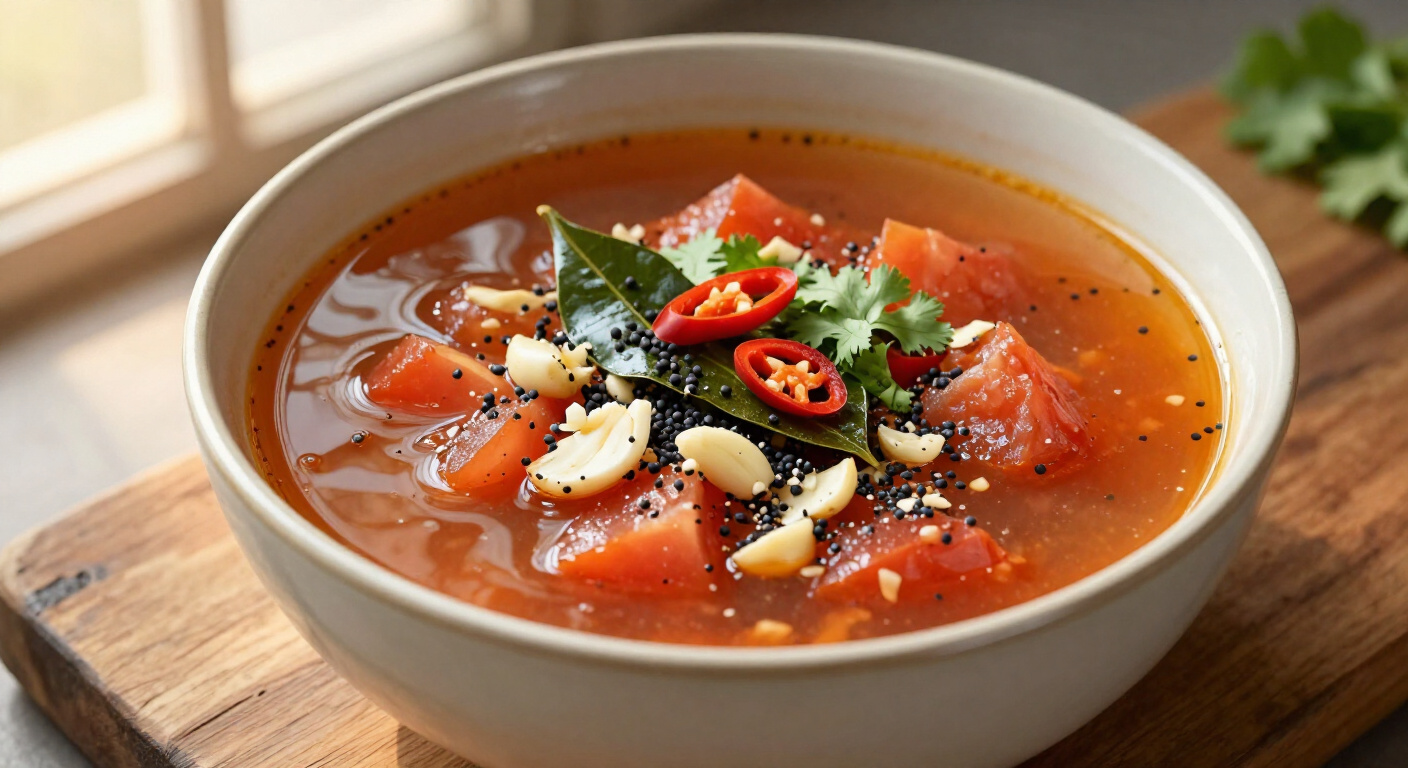
This rasam recipe makes a peppery, tangy tamarind tomato broth with sizzling ghee tempering in 45 minutes. Ladle it over hot rice for pure comfort.
This peppery rasam recipe hisses with ghee-crisped curry leaves, giving you a tangy, garlicky tomato broth and glossy rasam rice in 45 minutes. It's lighter and easier than sambar, perfect for quiet weeknight comfort.
Boiling the tamarind until its raw edge fades, then pulling the pot off the heat the moment a pale froth rises, keeps the broth bright and peppery instead of flat.
Ingredients You'll Need
Toor Dal (Split Pigeon Peas): These small, golden split lentils simmer down into a soft, silky purée. They give rasam its gentle body without making it thick like sambar. Yellow moong dal is the best swap, and it cooks a little faster.
Water: Water is the backbone of this thin, sippable broth. Half cooks the dal, and the rest loosens the finished soup into its classic light texture. Use plain filtered water. Stock would cover the bright spices.
Seedless Tamarind: This sticky, dark-brown fruit pulp brings the deep, puckery tang rasam is loved for. Soaking it in hot water softens it so every bit of sourness squeezes out. In a pinch, use 1 to 1½ teaspoons of tamarind concentrate dissolved in warm water.
Ripe Tomatoes: Juicy, chopped tomatoes melt into the broth. They add a round, fruity sweetness that softens the sharp tamarind. Canned diced tomatoes work well, about ¾ cup with their juice.
Garlic Cloves: Peeled and lightly crushed, the cloves stay whole enough to perfume the pot slowly. Their mellow, warming bite is a big part of rasam's comfort. Swap in ¼ teaspoon garlic powder if your bulb has run out.
Black Peppercorns: Coarsely crushed peppercorns are the star here. They bring that gentle, throat-warming heat that makes rasam feel so soothing. Freshly ground pepper works, but use a little less because it hits harder.
Cumin Seeds: Crushed cumin adds an earthy, toasty warmth beneath the pepper. It also makes the broth smell wonderfully nutty as it boils. Use ½ teaspoon ground cumin if you don't have seeds.
Rasam Powder: This roasted spice blend usually holds coriander, chilies, pepper and lentils. It layers smoky depth into the broth in one easy spoonful. Sambar powder is the closest stand-in, though it tastes a bit heavier.
Ground Turmeric: Just a pinch turns the broth a sunny, golden amber. It adds a soft, earthy note without stealing the show. There's no true substitute. Leave it out and the rasam will just look paler.
Kosher Salt: Salt wakes up the tang and pulls the pepper and tomato into focus. Without it, rasam tastes flat and watery. Use about half as much fine table salt, then taste and adjust.
Jaggery: This unrefined cane sugar has a caramel, almost molasses-like sweetness. A small amount balances the sour tamarind so the broth tastes rounded. Brown sugar is the easiest swap and works beautifully.
Ghee: Clarified butter is nutty, fragrant and rich, and it shows up twice. It carries the sizzling tempering, then pools in golden drops over the rice. Coconut oil or a neutral oil works for the tempering. Use a pat of butter for the rice.
Black Mustard Seeds: These tiny dark seeds pop and crackle in hot ghee. They release a sharp, nutty flavor that brightens the finished broth. Brown mustard seeds are a perfect match. Yellow seeds are milder but still fine.
Dried Red Chilies: Broken in half, they toast in ghee and lend a smoky, gentle heat. They flavor the tempering more than they burn. A pinch of red pepper flakes will do the job.
Fresh Curry Leaves: Glossy and green, these leaves crisp up in ghee and smell almost citrusy. They are the soul of a South Indian tempering. There's no real substitute, so check Indian grocers or freeze a stash.
Asafoetida (Hing): This pungent resin powder turns savory and oniony once it hits hot fat. A tiny pinch adds a deep, mellow backbone. Skip it if needed, or add a pinch of onion powder instead.
Fresh Cilantro: Finely chopped cilantro adds a fresh, grassy lift right at the end. Its bright green flecks look lovely floating in the amber broth. Flat-leaf parsley works if cilantro tastes soapy to you.
Cooked Rice: Hot, fluffy rice soaks up the peppery broth for true rasam rice. Sona masoori is soft and slightly sticky, so it mashes beautifully. Basmati is a great choice too, and so is any medium-grain white rice.


How to Make It (Step by Step)
This rasam comes together in two small pots: soften the dal, simmer a tangy tamarind-tomato broth, then finish with a sizzling ghee tempering. Even if you've never cooked South Indian food before, you'll ladle out a fragrant, soul-warming bowl on your first try.

- Simmer the rinsed toor dal with 2 cups of the water in a small saucepan, partly covered, until the grains collapse and squash easily against a spoon, 20-25 minutes at a gentle simmer (200°F / 93°C). Let it bubble lazily. This is the quiet start of a good rasam recipe.

- Squeeze the soaked tamarind firmly in its hot soaking water, then strain it until you have a smooth, thin brown extract, 2-3 minutes at warm (140°F / 60°C). Press the pulp hard against the strainer. Every drop carries tang.

- Boil the tamarind extract with the tomatoes, garlic, crushed pepper and cumin, rasam powder, turmeric, salt and jaggery until the tomatoes slump and the raw tamarind smell fades, 8-10 minutes at medium heat (212°F / 100°C). Your kitchen will smell peppery and bright.

- Whisk the cooked dal off the heat until it turns into a smooth, creamy purée with no whole grains left, 1-2 minutes at warm (160°F / 71°C). Silky dal gives the soup its gentle body.

- Stir the dal purée and the remaining 2 cups of water into the pot until a pale froth rises across the surface, 3-5 minutes at medium-low (195°F / 90°C). Turn off the heat right then. A hard boil dulls the flavor.

- Heat the ghee in a small pan, then fry the mustard seeds, chilies, curry leaves and asafoetida until the seeds pop and the leaves turn crisp, 1-2 minutes at medium (325°F / 165°C). Stand back a little. The curry leaves spit.

- Pour the sizzling tempering into the rasam, scatter in the cilantro, then cover and rest until the aromas bloom through the broth, 5 minutes off the heat (185°F / 85°C). That hiss is my favorite sound. Don't rush this rest.

- Mound the hot rice into bowls, drizzle with ghee, and ladle rasam over it until the rice is glossy and soaking, 1-2 minutes at serving heat (165°F / 74°C). Mash it together with a spoon. That's rasam rice, and it tastes like comfort.

Rasam keeps four days chilled or three months frozen; rewarm it gently, never boiling. Lime juice can replace tamarind, the dal cooks a day ahead, and always taste for salt before serving.
Serving size: 1 portion · Calories: 110 · Total Fat: 4g · Saturated Fat: 2.3g · Carbs: 15g · Fiber: 3g · Sugar: 4g · Protein: 4g · Sodium: 480mg
Tips and Tricks
- Equipment: Use a stainless steel pot: Tamarind is acidic, so skip aluminum or bare cast iron. Those can turn the broth metallic and murky. Stainless keeps your rasam bright, clean and peppery.
- Temperature precision: Get the ghee to 325°F before tempering: Drop in one mustard seed first. It should sizzle right away. Then the seeds pop properly, and the curry leaves fry crisp and glassy instead of limp and oily.

- Common mistake: Peeking during the rest: Lifting the lid lets all that fragrant steam drift away. Keep it covered for the full five minutes. The ghee, curry leaves and cilantro need that quiet time to melt into the broth.
- Flavour upgrade: Add a little fresh ginger: Crush a thumb-sized coin of peeled ginger and boil it with the tomatoes. It adds a warm, gentle heat. On a chilly evening, that slow glow feels like a hug.
- Texture tip: Mash the rice before you ladle: Press the hot rice with the ghee first, so the grains loosen and turn glossy. Then add the rasam. Every grain soaks up the tangy broth instead of sitting in a puddle.

Frequently Asked Questions
Can I make this rasam recipe vegan without losing the tempering's rich flavor?
Swap the 1 tablespoon ghee in the tempering for 1 tablespoon cold-pressed sesame or coconut oil, and drizzle the rice with 2 teaspoons of the same oil. Also check your asafoetida label, since many brands are cut with wheat flour.
Can I store leftover rasam rice already mixed, or keep them separate?
Keep them apart, since mixed rasam rice turns mushy and should be eaten within 1 day, while plain rice keeps 3-4 days chilled or 1 month frozen. Reheat the rice covered with a splash of water in the microwave for 1-2 minutes, then ladle on freshly warmed rasam.
Why does my rasam taste flat and dull instead of bright and peppery?
It was likely boiled hard after the dal went in, which mutes the pepper and tamarind. Next time, warm it at medium-low only until a pale froth rises across the surface, kill the heat immediately, and add a fresh pinch of crushed pepper to revive a dull batch.
What to Serve With This
- Crispy Potato Roast: Golden, spice-crusted potato cubes bring a crunchy, earthy weight that the thin, tangy broth soaks right into.
- Appalam (Papadum): Shatter-crisp and salty, it adds the crackle that soft, glossy rasam rice is begging for.
- Green Bean Poriyal with Coconut: Sweet grated coconut and tender beans calm the peppery heat with a fresh, gentle crunch.
- Cucumber Raita: Cool, creamy yogurt with crisp cucumber soothes every fiery, garlicky spoonful between bites.

Peppery Tamarind Tomato Rasam Recipe for Comforting Rasam Rice
Lunch / Indian
- Prep
- 15 min
- Cook
- 30 min
- Total
- 45 min
- Servings
- 4
- Calories
- 110 kcal
Ingredients
- ¼ cup toor dal (split pigeon peas), rinsed until the water runs clear
- 4 cups water, divided
- 1 tablespoon seedless tamarind (about a lime-sized ball), soaked in 1 cup hot water for 15 minutes
- 2 medium ripe tomatoes, chopped
- 4 garlic cloves, peeled and lightly crushed
- 1 teaspoon black peppercorns, coarsely crushed
- 1 teaspoon cumin seeds, coarsely crushed
- 1½ teaspoons rasam powder
- ¼ teaspoon ground turmeric
- 1¼ teaspoons kosher salt, plus more to taste
- 1 teaspoon jaggery or brown sugar
- 1 tablespoon ghee
- 1 teaspoon black mustard seeds
- 2 dried red chilies, broken in half
- 1 sprig fresh curry leaves (about 12 leaves)
- ⅛ teaspoon asafoetida (hing)
- 2 tablespoons fresh cilantro, finely chopped
- 2 cups hot cooked rice, such as sona masoori or basmati
- 2 teaspoons ghee, for drizzling
Instructions
- Simmer the rinsed toor dal with 2 cups of the water in a small saucepan, partly covered, until the grains collapse and squash easily against a spoon, 20-25 minutes at a gentle simmer (200°F / 93°C). Let it bubble lazily. This is the quiet start of a good rasam recipe.
- Squeeze the soaked tamarind firmly in its hot soaking water, then strain it until you have a smooth, thin brown extract, 2-3 minutes at warm (140°F / 60°C). Press the pulp hard against the strainer. Every drop carries tang.
- Boil the tamarind extract with the tomatoes, garlic, crushed pepper and cumin, rasam powder, turmeric, salt and jaggery until the tomatoes slump and the raw tamarind smell fades, 8-10 minutes at medium heat (212°F / 100°C). Your kitchen will smell peppery and bright.
- Whisk the cooked dal off the heat until it turns into a smooth, creamy purée with no whole grains left, 1-2 minutes at warm (160°F / 71°C). Silky dal gives the soup its gentle body.
- Stir the dal purée and the remaining 2 cups of water into the pot until a pale froth rises across the surface, 3-5 minutes at medium-low (195°F / 90°C). Turn off the heat right then. A hard boil dulls the flavor.
- Heat the ghee in a small pan, then fry the mustard seeds, chilies, curry leaves and asafoetida until the seeds pop and the leaves turn crisp, 1-2 minutes at medium (325°F / 165°C). Stand back a little. The curry leaves spit.
- Pour the sizzling tempering into the rasam, scatter in the cilantro, then cover and rest until the aromas bloom through the broth, 5 minutes off the heat (185°F / 85°C). That hiss is my favorite sound. Don't rush this rest.
- Mound the hot rice into bowls, drizzle with ghee, and ladle rasam over it until the rice is glossy and soaking, 1-2 minutes at serving heat (165°F / 74°C). Mash it together with a spoon. That's rasam rice, and it tastes like comfort.
Share this article
About the author

Hannah Brooks
Hannah grew up in a house where dinner was always rushed and always tense, and she swore her own kitchen would be the opposite. So she cooks things that take hours on purpose: soups, stews, braises that fill the house with patience. Slow food is her way of proving that home can feel safe.