Classic Beef Rouladen Recipe With Bacon and Pickle Stuffing
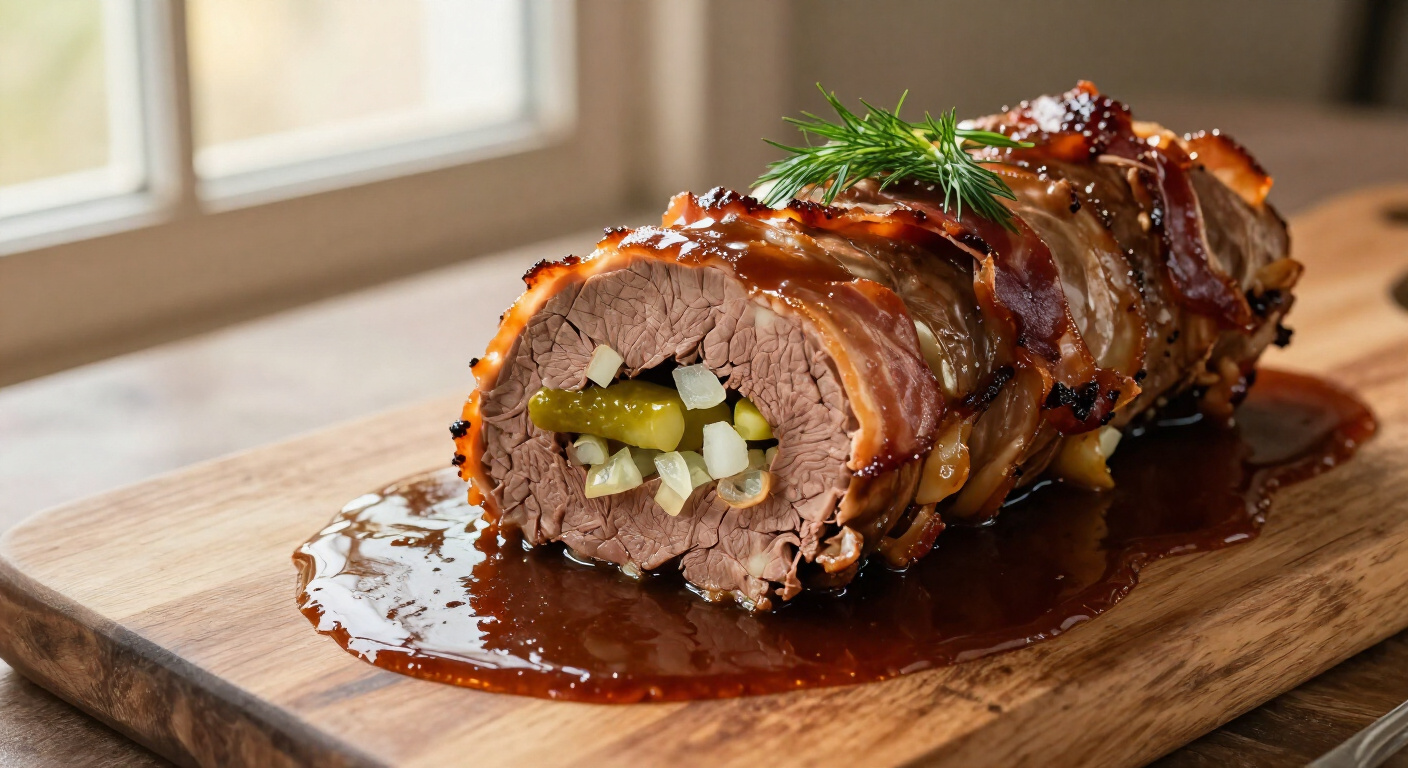
Rouladen recipe with smoky bacon and tangy pickle, fork-tender beef under velvety gravy in 2 hours 15 minutes. Try this German Sunday classic today.
This rouladen recipe fills the kitchen with golden, savory aromas. Plan on about 2 hours 15 minutes for fork-tender beef under velvety gravy. Save it for a lazy Sunday when you want cozy, show-stopping comfort food.
Why This Recipe Works
• Pound steaks to even thickness: Flattening the top round to ¼ inch means every roll cooks at the same pace. Thin, uniform steaks also roll tightly, so the stuffing stays put.
• Sear hard to build flavorful fond: Hot oil triggers the Maillard reaction, browning the beef and leaving dark bits on the pot. That fond becomes the flavor base for your gravy.
• Toast flour in drippings for gravy: Cooking flour in the beef drippings until nutty creates a roux that thickens evenly. Stirring constantly keeps it smooth when the broth goes in.
• Braise low to melt collagen: At 325°F, the connective tissue in top round slowly turns into gelatin. That gelatin gives the beef a tender bite and a silky, full-bodied gravy.
Ingredients You'll Need
Beef Top Round Steaks: Top round is a lean, affordable cut from the back leg. Pounded to ¼ inch, it rolls tightly and turns fork-tender during the long braise. Bottom round or sirloin tip works well if you pound it the same way.
Dijon Mustard: This sharp, smooth mustard gives the beef a tangy base that helps the filling stay put. Its heat mellows completely during braising. Whole-grain mustard is a great swap, or use yellow mustard for a milder bite.
Bacon: Thin bacon strips add salty, smoky fat that melts into every bite. Cut them thin so they cook through inside the roll. Pancetta is the best substitute, though it's a little less smoky.
Dill Pickles: Pickle spears bring briny crunch that cuts through the rich beef. They're what makes this rouladen taste classically German. Dill gherkins or cornichons work well, since they're small enough to roll neatly.
Yellow Onion: Finely diced onion softens inside each roll and turns sweet and savory. It melts into the filling so you won't see big chunks. Shallot is a milder, sweeter swap, and white onion works too.
Kosher Salt: Salt seasons the beef all the way through and brings out its flavor. Coarse kosher flakes are easy to pinch and spread evenly. Fine sea salt works, but use less since it's denser.
Freshly Ground Black Pepper: Black pepper adds gentle heat and woody warmth to the beef. Grind it fresh so the flavor stays bright. White pepper is a milder, slightly earthy swap.
Vegetable Oil: A neutral oil with a high smoke point lets you sear the rolls hard without scorching. It handles the 400°F sear without turning bitter. Canola or avocado oil are both excellent swaps.
Carrot: Diced carrot softens in the drippings and adds natural sweetness to the gravy base. It's one of the classic flavor builders for braises. Parsnip is a good swap for a slightly earthier note.
Celery Stalk: Diced celery adds savory, herbal depth that rounds out the gravy. It cooks down soft and almost disappears into the sauce. Fennel bulb or a pinch of celery seed are good substitutes.
All-Purpose Flour: Flour toasted in the drippings becomes a roux that thickens the gravy smoothly. Stirring constantly keeps it lump-free. Cornstarch works too: mix 1 tablespoon with cold water and stir it in at the end.
Beef Broth: Beef broth turns the pan drippings into a rich, savory gravy and braising liquid. Choose low-sodium so you control the saltiness. Vegetable broth is a lighter swap, though the gravy will taste less beefy.
Dry Red Wine: Red wine loosens the browned bits from the pan and carries them into the gravy. It adds depth and a bit of bright acidity. Use extra beef broth with a splash of red wine vinegar as a non-alcoholic swap.
Bay Leaves: Bay leaves add a subtle herbal, slightly floral note during the simmer. Remove them before serving, since they're tough to chew. Dried thyme, about ½ teaspoon, is a fine substitute.


How to Make It (Step by Step)
Roll seasoned steaks around their filling, sear them golden, then braise them low in a red wine gravy. Even if you've never tied a beef roll before, you'll nail it with a little patience.

- Season the steaks with ½ teaspoon kosher salt and ¼ teaspoon black pepper, then spread Dijon mustard thinly over each one until a glossy yellow coat covers the meat, 2-3 minutes at room temperature (68-72°F / 20-22°C). Spread it all the way to the edges.

- Lay bacon strips, pickle spears, and diced onion across the lower third of each steak, then roll tightly and tie with kitchen twine until each bundle holds firm, 3-5 minutes at room temperature (68-72°F / 20-22°C).

- Sear the rolls in 2 tablespoons hot vegetable oil in a heavy Dutch oven over medium-high heat (400°F / 200°C) until deep golden-brown on all sides, 8-10 minutes total. Turn them often so every side browns evenly.

- Move the rolls to a plate, then cook the diced carrot and celery in the beef drippings over medium heat (350°F / 175°C) until softened and lightly browned at the edges, 4-5 minutes.

- Sprinkle the flour over the vegetables and stir constantly until it turns pale golden and smells nutty, 1-2 minutes at medium heat (350°F / 175°C).

- Pour in the red wine and scrape up the browned bits, then stir in the beef broth and bay leaves. Simmer at 212°F / 100°C until the gravy turns smooth and lightly thickened, 3-4 minutes.

- Return the rolls to the pot, cover, and braise at low heat (325°F / 165°C) until the beef is fork-tender and the gravy coats the back of a spoon, 60-75 minutes.

Recipe Notes
• Storage: Keep rolls and gravy in an airtight container in the fridge for up to 4 days. Reheat covered in a low oven at 300°F with a splash of broth, so the beef stays tender.
• Key substitution: No dry red wine? Use 1 cup beef broth plus 1 tablespoon red wine vinegar. You'll get that deep, tangy backbone without opening a bottle.
• Make-ahead tip: Roll and tie the steaks up to 24 hours early. Cover them tightly and refrigerate, then sear straight from cold for an even, golden crust.
• Common mistake: Tying the twine loosely lets the stuffing escape during braising. Pull each knot snug, and space ties about an inch apart.
Serving size: 1 portion · Calories: 480 · Total Fat: 26g · Saturated Fat: 9g · Carbs: 14g · Fiber: 2g · Sugar: 4g · Protein: 42g · Sodium: 890mg
Tips and Tricks
- Equipment: Use a heavy Dutch oven: Thick walls hold steady heat, so the rolls sear evenly and the fond builds without scorching. The lid traps moisture for the braise.

- Temperature precision: Hold the braise at 325°F: Hotter than that, the beef tightens and the gravy can turn tough and thin. An oven thermometer shows whether your oven runs hot or cold.
- Common mistake: Crowding the pot while searing: Packed rolls steam in their own juices and turn grey instead of browning. Work in batches and leave space between each roll.
- Flavour upgrade: Add a pinch of ground allspice: A small pinch adds warm, classic German depth without tasting spiced. Stir it in with the bay leaves.
- Texture tip: Pat the rolls dry before searing: Surface moisture steams the beef instead of browning it. Dry rolls form a crisp, deep golden crust that adds flavor to the gravy.

Frequently Asked Questions
Can I make this rouladen recipe without bacon or with a dairy-free or gluten-free swap?
Replace the 4 bacon slices with 4 ounces diced smoked turkey or 2 tablespoons olive oil for a vegetarian-friendly stuffing. For gluten-free, swap the 2 tablespoons all-purpose flour with 1 tablespoon cornstarch mixed into cold broth.
Can I freeze beef rouladen and gravy, and how long does it keep?
Yes, cool everything completely, then freeze the rolls and gravy together in a sealed container for up to 3 months. Thaw overnight in the fridge, then reheat gently in a covered pot over low heat with a splash of broth.
Why are my rouladen still tough after 75 minutes of braising?
Tough top round usually needs more time, not less heat, because collagen takes longer to break down. Keep the pot covered at 325°F and check every 15 minutes, adding a splash of broth if the liquid drops, until a fork slides in easily.
What to Serve With This
- Braised Red Cabbage: Sweet-sour cabbage with apple and vinegar cuts through the rich beef and silky gravy.
- Cucumber Salad: Thin cucumber slices in tangy vinegar and fresh dill add a crisp, bright bite.
- Creamy Mashed Potatoes: Fluffy, buttery mash soaks up every drop of gravy and adds a soft, creamy counterpoint to the tender beef.
- Lemon Green Beans: Blanched green beans tossed with lemon zest and butter bring a crisp, fresh snap to the plate.

Classic Beef Rouladen Recipe With Bacon and Pickle Stuffing
Dinner / German
- Prep
- 45 min
- Cook
- 1 h 30 min
- Total
- 2 h 15 min
- Servings
- 4
- Calories
- 480 kcal
Ingredients
- 4 beef top round steaks (about 6 ounces each), pounded to ¼ inch thick
- 2 tablespoons Dijon mustard
- 4 slices bacon, cut into thin strips
- 2 dill pickles, cut into thin spears
- 1 small yellow onion, finely diced
- ½ teaspoon kosher salt
- ¼ teaspoon freshly ground black pepper
- 2 tablespoons vegetable oil
- 1 medium carrot, diced
- 1 celery stalk, diced
- 2 tablespoons all-purpose flour
- 2 cups beef broth
- 1 cup dry red wine
- 2 bay leaves
Instructions
- Season the steaks with ½ teaspoon kosher salt and ¼ teaspoon black pepper, then spread Dijon mustard thinly over each one until a glossy yellow coat covers the meat, 2-3 minutes at room temperature (68-72°F / 20-22°C). Spread it all the way to the edges.
- Lay bacon strips, pickle spears, and diced onion across the lower third of each steak, then roll tightly and tie with kitchen twine until each bundle holds firm, 3-5 minutes at room temperature (68-72°F / 20-22°C).
- Sear the rolls in 2 tablespoons hot vegetable oil in a heavy Dutch oven over medium-high heat (400°F / 200°C) until deep golden-brown on all sides, 8-10 minutes total. Turn them often so every side browns evenly.
- Move the rolls to a plate, then cook the diced carrot and celery in the beef drippings over medium heat (350°F / 175°C) until softened and lightly browned at the edges, 4-5 minutes.
- Sprinkle the flour over the vegetables and stir constantly until it turns pale golden and smells nutty, 1-2 minutes at medium heat (350°F / 175°C).
- Pour in the red wine and scrape up the browned bits, then stir in the beef broth and bay leaves. Simmer at 212°F / 100°C until the gravy turns smooth and lightly thickened, 3-4 minutes.
- Return the rolls to the pot, cover, and braise at low heat (325°F / 165°C) until the beef is fork-tender and the gravy coats the back of a spoon, 60-75 minutes.
Share this article
About the author
Hannah Brooks
Hannah grew up in a house where dinner was always rushed and always tense, and she swore her own kitchen would be the opposite. So she cooks things that take hours on purpose: soups, stews, braises that fill the house with patience. Slow food is her way of proving that home can feel safe.